
December Will Be Too Late
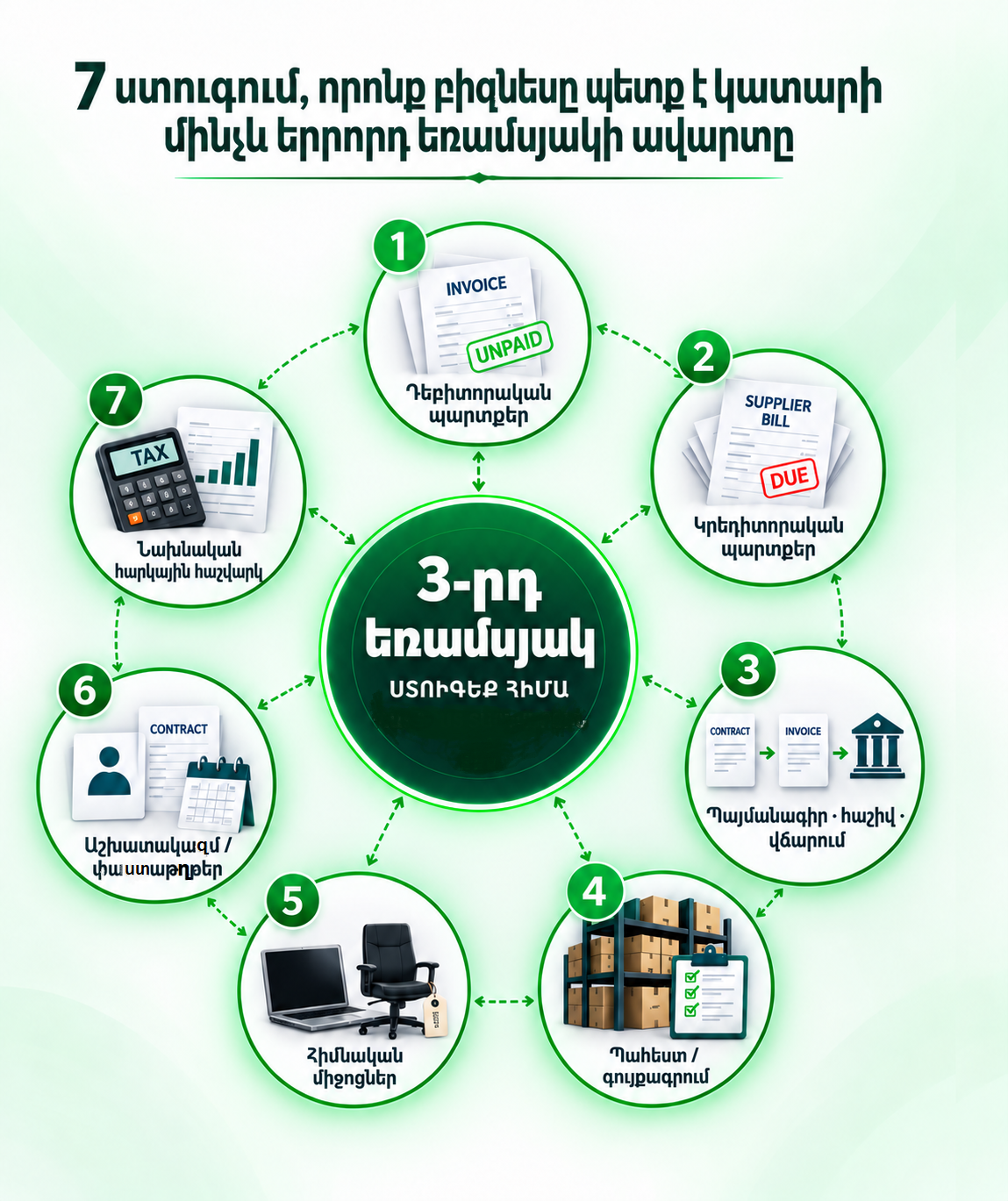
7 checks every business should complete before the third quarter ends
It is one of the last days of September. A business owner opens the sales report and is pleased to see that turnover for the first nine months has increased compared with the previous year. The team is working, customers are paying, and new contracts are being signed. It seems safe to carry on until December and revisit the annual results after the New Year rush. Then, in December, the accountant reports that several customer balances should have been settled long ago, the actual inventory does not match the figures in the accounting system, some expenses lack adequate supporting documents, and several pieces of equipment purchased during the year have still not been recorded correctly. Reporting deadlines are approaching at the same time, business partners are leaving for the holidays, and every problem takes longer than usual to resolve.
Many businesses know this story. Year-end closing is often treated as the accountant’s job for December, although in a well-organized accounting system it begins in September. The end of the third quarter is the best time to pause, reconcile the figures, and correct errors while there is still enough time. The following seven checks can protect a business from unpleasant surprises at year-end. This is also a good time for a dedicated meeting between the owner and the accountant. The purpose is not to discuss another payment or report, but to review the complete picture together. A single meeting of this kind often uncovers issues that have been overlooked for months amid routine emails and urgent assignments.
1 Check who owes the business and how much
A sale does not necessarily mean the money has been received. The reports may show impressive revenue while the bank account remains short of cash because customers are paying late. At the end of September, the business should prepare a complete list of accounts receivable by customer, amount, and payment due date. It is particularly important to identify balances that are already overdue. Sometimes a customer has not paid because of a missing invoice, an unsigned acceptance certificate, or a discrepancy in the contract rather than a financial problem. If the issue is discovered in September, the chances of collecting the money before year-end are much higher.
2 Do not overlook your own liabilities
Accounts payable deserve the same attention. Who does the company need to pay, when is payment due, and are there any unconfirmed amounts or balances that have not been reconciled with suppliers? A small difference may go unnoticed during the year but turn into a dispute or a cash flow problem by year-end. This review also helps forecast payments for the next three months. The owner can see whether the available cash is genuinely free or has already been committed to taxes, suppliers, salaries, and loan repayments.
3 Reconcile contracts, invoices, and payments
The three main sources of information about a transaction should tell the same story. The service described in the contract, the invoice issued, and the purpose stated in the bank payment should be consistent. If the contract says one thing, the invoice says another, and the payment description is too general, questions may arise not only from the counterparty but also from the tax authority. The business should select its major and non-standard transactions for the year and review the entire supporting-document chain. Advance payments, transactions with foreign counterparties, loans, payments to related parties, and long-term services deserve particular attention. Accurate tax accounting is possible only when documents clearly substantiate the economic substance of a transaction.
4 Count the inventory, not just the figures in the system
The accounting system may show one hundred units of a product while only ninety-six are actually in stock. The cause may be a data-entry error, an undocumented transfer, damaged goods, a return, or simple human oversight. If the discrepancy is discovered in December, it may be difficult to determine when and why it arose. At the end of the third quarter, the business can conduct a selective inventory count, starting with its most expensive, fast-moving, and high-risk items. This is not merely an accounting issue. Products in which the company’s cash is tied up may remain in storage for months. Once the owner sees the real picture, purchasing or sales policies can be adjusted in time.
5 Review fixed assets and investments made during the year
Throughout the year, companies buy computers, equipment, furniture, and vehicles or renovate their premises. During busy day-to-day operations, these purchases are sometimes recorded merely as payments, while their proper accounting treatment is postponed. In September, the company should confirm that all assets have been recorded, placed in service, and classified correctly, that acceptance documents are available, and that depreciation starts from the correct date. Incorrect classification can affect both the financial result and the company’s tax liabilities.
6 Review employee documents and calculations
Over nine months, employees’ salaries, positions, schedules, or responsibilities may have changed. An employee continues working under the new terms, but the change sometimes remains only a verbal agreement. Later, this may cause problems with the employee, an inspection authority, or the company’s tax accounting. Employment contracts, internal orders, leave records, working-time data, and actual payments should be reconciled. The company should also confirm that relationships with individuals engaged under civil-law service agreements have not, in practice, acquired the characteristics of employment relationships.
7 Prepare a preliminary tax calculation
The amount of tax due at year-end should not come as a surprise. Based on nine months of data, the company can already estimate its annual profit, expected taxes, and available cash. If turnover is approaching the threshold for the applicable tax regime, this should also be identified in advance rather than after the limit has been exceeded. A preliminary calculation makes it possible to check whether all deductible expenses have sufficient support, whether tax incentives have been applied correctly, and whether any transactions require a professional opinion. This is where accounting and tax accounting come together: the figures must not only be recorded correctly but also show the true state of the business and its potential risks.
Year-end should be a summary, not a rescue operation
When these seven checks are completed in September or October, December looks very different. The accountant is not searching for documents lost months earlier, the owner is not trying to collect overdue balances at the last minute, and the team is not reconstructing an entire year of events from memory. All that remains is to update the figures already reviewed and close the year calmly. Good accounting is about more than filing reports on time. It should show the business in advance where problems are accumulating, which amounts are at risk, and which decisions need to be made today. That is why the end of the third quarter is not just another reporting date. It is the final opportunity of the year to put the figures in order without rushing and enter December prepared for the results rather than surprised by them.