
When the Contract, Invoice, and Payment Tell Three Different Stories
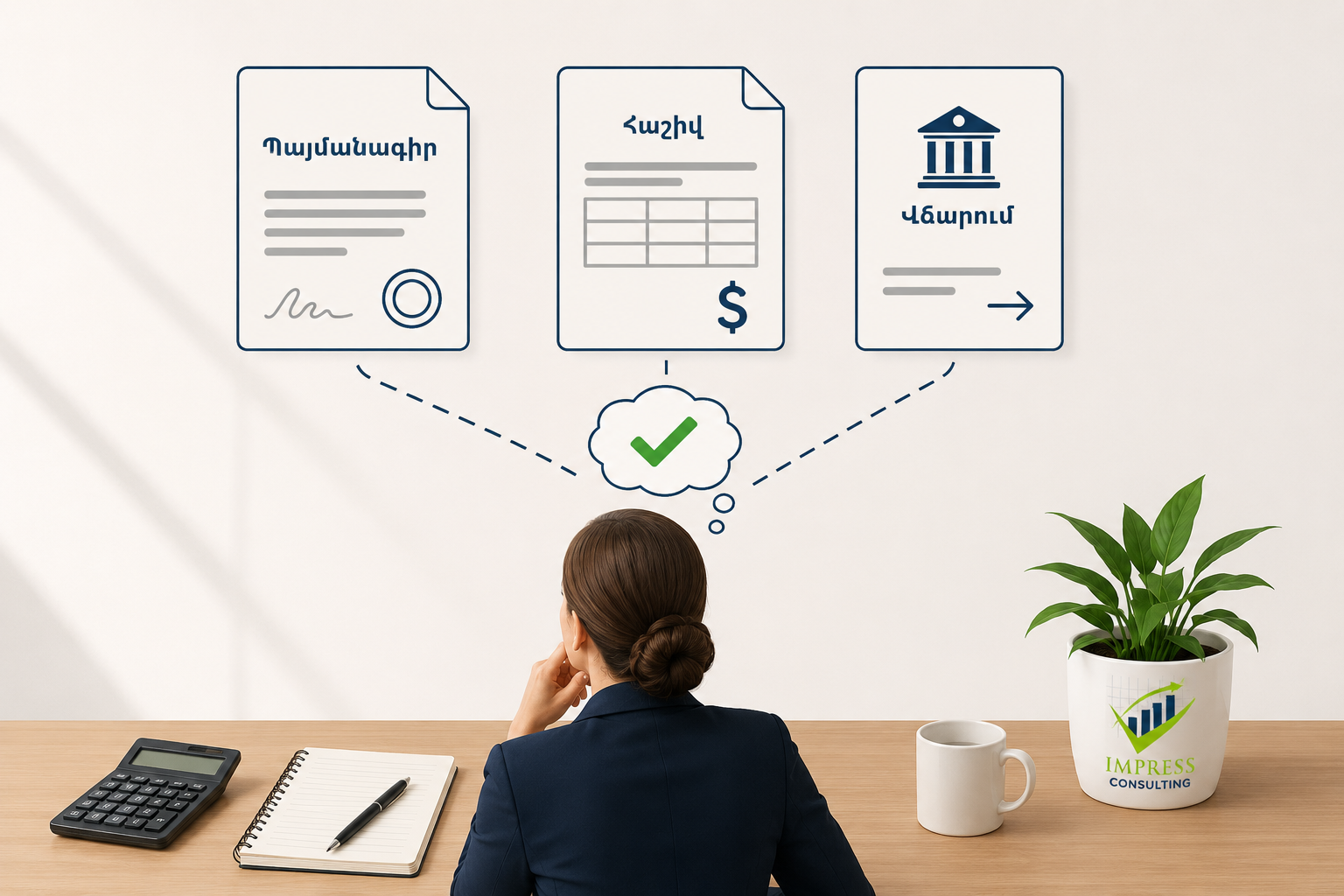
In business, a transaction is often considered complete once the customer has paid for services already delivered or goods already supplied and the money has reached the bank account. The director is satisfied, the sales manager closes the order, and the team moves on to the next customer. For the accountant, however, the story may only be beginning at that moment.
Imagine a simple situation. A company signs an agreement for consulting services. The issued invoice says “marketing services,” while the customer writes “advance payment for software” in the bank transfer details. The amount is the same, the parties are the same, and a genuine transaction did take place. Yet the three documents tell three different stories. To the owner, this may look like a technical detail. From a tax-accounting perspective, however, such an inconsistency can raise many questions.
One Transaction, but Three Different Explanations
The documentary history of a transaction usually consists of several elements: a contract, an invoice or tax invoice, an acceptance certificate, a bank payment, and sometimes correspondence between the parties. These documents must not only be correct individually; they must also be consistent with one another. If the contract refers to one service, the invoice to another, and the payment details to a third, it becomes difficult to determine exactly what transaction actually took place.
The problem becomes especially significant during a tax audit or when the tax authority requests information. An inspector does not view the transaction as the director or sales manager remembers it. The inspector studies the documents and uses them to reconstruct the economic substance of what occurred. If the documents contradict one another, the company has to provide additional explanations.
Why Precise Wording Matters So Much
The way a transaction is described can affect its tax treatment. The sale of goods, property rental, consulting, software development, the granting of a license, and intermediary services are not always treated in the same way for tax purposes.
The differences may concern:
- - the rules for applying VAT;
- - the place where a service is supplied or consumed;
- - the moment when revenue is recognized;
- - the obligation to withhold tax from a payment to a non-resident;
- - whether an expense may be deducted for tax purposes;
- - the documents required to substantiate the transaction.
For this reason, a tax-accounting professional needs to understand not only the amount transferred but also its real purpose. When documents use arbitrary or overly general wording, the accounting team does not receive the complete picture needed to assess the transaction correctly.
Is “Payment for Services” Enough?
Bank transfers often contain very general descriptions such as “payment for services,” “under the agreement,” “for goods,” or simply an invoice number. Such wording is not always wrong, but it often provides too little information. If a company has several contracts with the same counterparty or carries out transactions of different types, it may later be difficult to establish which specific obligation the payment related to.
It is more useful to state the contract number and date, the invoice number, the payment stage, and the general nature of the transaction. For example, “Advance payment under Consulting Services Agreement No. 24 dated 15 August 2026” is much clearer than simply “service fee.” A properly described payment also makes it easier to find the relevant documents quickly, even years later.
When the Customer Uses the Wrong Payment Description
A company cannot always control what a customer writes in the bank transfer details. Sometimes the customer uses information from an old contract, confuses invoice numbers, or labels the payment as an advance even though the service has already been delivered. When such an error is discovered, ignoring it is rarely the best solution. Depending on the circumstances, the company can obtain an official letter from the customer clarifying the correct purpose of the payment. In some cases, an appropriate correction can also be arranged through the bank. The key is to preserve a documentary trail that will allow the company to explain the discrepancy in the future. A verbal explanation alone is usually weak protection, especially if several years have passed or the responsible employee no longer works for the company.
Advance Payment or Final Settlement?
Distinguishing an advance from a final payment requires particular attention. In both cases, the director sees money entering the company. For accounting purposes, however, it is essential to know whether the service has already been delivered, the goods have been shipped, or the amount was received against a future obligation. If the contract provides for an advance but the documents present it as payment for a service already delivered, differences may arise in the calculation of revenue, liabilities, and taxes. The reverse situation also creates risks: the transaction is complete, but the payment continues to be recorded as an advance received from the customer. Errors of this kind are often discovered not immediately, but during the year-end closing process, reconciliation of balances, or an audit.
The Risk Is Greater with Foreign Partners
Consistency between documents is especially important in international transactions. A foreign partner may use terms such as consulting, development, management fee, subscription, license, royalty, or commission in the contract. At first glance, these may seem like simple service labels, but their tax treatment can differ. For example, an agreement may be called a consulting contract, while its substance shows that the company is actually granting the right to use a software product. Or a document may refer to a commission even though the payment is, in substance, for management services. The tax authority normally considers not only the title of the agreement but also the transaction’s real substance. Renaming documents therefore cannot change the nature of a transaction, but an inaccurate label can create unnecessary tax risk.
How to Set Up Simple Document Controls
A small company does not need to build a complicated document-control system. It can begin with a few straightforward rules. Before the first payment, the responsible employee should verify that the subject of the contract, the invoice, and the proposed payment description are consistent. For new or non-standard transactions, it is advisable to send the draft agreement to the accountant or tax adviser in advance. After payment, the bank statement should be matched against the relevant contract and invoice. If a discrepancy is found, it should be clarified immediately rather than at year-end. It is also useful to keep the documents for each transaction as one complete package: the agreement, appendices, invoices, acceptance certificates, payment confirmations, and important correspondence.
Accounting Is More Than Entering Numbers
Good accounting is not limited to recording bank receipts and payments in accounting software. The accountant must understand the economic event behind every figure and determine whether that event has been documented properly. For this reason, an accountant’s additional questions should not be viewed as needless bureaucracy. When the accountant asks what the money was received for, what service was delivered, or why the payment description differs from the contract, the accountant is actually protecting the company from future problems. Proper tax accounting begins not on the day a tax return is filed, but when the terms of the transaction are agreed.
Conclusion
The contract, invoice, acceptance certificates, and bank payment should present one coherent and understandable story. When each says something different, even a genuine and lawful transaction may appear suspicious or incorrectly documented. Document consistency does not require major expense or complex technology. It requires clear rules, a responsible employee, and timely involvement from the accounting team. Ultimately, well-organized accounting does more than calculate taxes. It ensures that the company can answer three simple questions clearly for every transaction: what happened, what the money was paid for, and which documents prove it.