
What Tax Authorities Actually “See” Through Your Bank Account
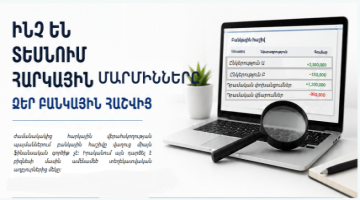
Many entrepreneurs still view a bank account simply as a tool for moving money. Funds come in, payments go out, transfers are completed - and that seems to be the end of the story.
But under modern tax control systems, a bank account is no longer just a financial instrument. In reality, it has become one of the largest sources of information about a business. And very often, banking transactions are exactly where additional questions, reviews, requests, or even tax audits begin. This does not mean tax authorities manually monitor every single transaction. Modern systems work very differently.
They do not try to individually investigate every business. Instead, they focus on identifying companies whose behavior, structure, or financial flows significantly differ from normal patterns. And this is where banking data becomes one of the most important signals.
Banking transactions often reveal more than tax reports
Interestingly, banking activity often provides tax authorities with more “live” information than official tax reports. Tax reports show the picture presented by the business itself. Bank transactions show what is actually happening in practice. That is why modern tax analysis increasingly focuses on how money moves.
For example:
- • who transfers money to whom,
- • how frequently,
- • in what amounts,
- • from which countries,
- • for what purpose,
- • and whether these movements logically match the company’s declared business activity.
If a company reports relatively small business activity while large amounts move through its accounts, the system will usually flag this as an inconsistency. But the opposite may also attract attention: when tax reports show substantial turnover while banking activity appears unusually limited.
“This is just a personal card” is becoming increasingly risky
In Armenia, it is still common for part of a business’s financial activity to pass through the personal cards or accounts of owners or employees. Many entrepreneurs consider this convenient or “temporary.”
For example:
- • a client quickly transfers money to a personal card,
- • a partner pays to a private account,
- • or a company temporarily uses the director’s personal card.
A few years ago, such practices rarely attracted serious attention. Today, the situation has changed significantly. And the issue is no longer only about taxes. When the boundaries between personal and business finances become blurred, the entire business structure starts losing logical consistency. And that is precisely when risks begin to appear. For tax authorities, it is extremely important to understand where personal activity ends and where business activity begins. If that boundary becomes unclear, questions usually arise very quickly.
When banking activity no longer matches business logic
One of the key characteristics of modern tax analysis is that attention is often drawn not to individual transfers, but to the overall picture.
For example:
• a company declares IT services while significant amounts of cash transactions move through its accounts.
• Or a business reports a very small number of employees while banking activity suggests much larger operational volumes.
• Or a company declares minimal profit while substantial funds move through the owner’s personal accounts.
None of these situations automatically means a violation exists. However, they often create a picture that appears “unusual” from the tax authority’s perspective. And that is exactly where deeper analysis begins.
International transfers almost always attract additional attention
Especially in recent years, international transactions have become one of the most sensitive areas. This is completely logical.
In cross-border transactions, it becomes significantly more difficult to determine:
- • where value is actually created,
- • where income should be taxed,
- • who the real service provider is,
- • and whether the transaction has genuine economic substance.
That is why incoming and outgoing international transfers usually receive additional scrutiny - especially when they do not match the company’s declared business model. For example, if a company reports relatively limited operations but regularly receives large international transfers, this will almost always become subject to additional analysis.
Attention toward cash operations is also increasing
Although cash transactions remain normal in many industries, tax authorities generally view large cash activity as a higher-risk area. The reason is simple: cash is significantly harder to control and analyze. As a result, businesses with substantial cash activity tend to attract greater attention.
Especially when:
- • cash turnover suddenly increases,
- • it differs from standard industry practice,
- • or inconsistencies appear between banking and tax data.
Many tax reviews begin not because of violations, but because things stop making sense
This is an extremely important point that many businesses realize too late. Modern tax control does not always begin because the system “knows” about a violation. In many cases, attention begins simply because the structure becomes difficult to understand. When figures, transfers, operations, and documentation no longer fit together logically, the system starts asking additional questions. And at that stage, the ability of the business to clearly and consistently explain its financial flows becomes critically important.
Good accounting is no longer just about filing reports
Many companies still view accounting only as a process of calculating taxes and submitting reports. But in today’s environment, accounting is increasingly becoming a risk-management system. That is why professional accounting companies are becoming more important than ever. Strong accounting firms help businesses not only prepare reports, but also build financial systems that reduce tax risks and ensure consistency between banking and tax data.
A properly organized accounting structure helps businesses:
- • separate personal and business flows,
- • preserve financial logic,
- • maintain documentation consistency,
- • and prevent situations where banking activity contradicts the actual business model.
This is especially important for companies working with international clients, service exports, IT operations, or complex business structures.
The most common myth
Perhaps one of the most dangerous assumptions is: “If the money is moving, everything must be fine.” In reality, under modern tax analysis systems, what matters is not only that money moves - but also:
- • why it moves,
- • between whom,
- • under what logic,
- • and whether the overall picture appears commercially natural from the outside.
Today, a bank account is no longer just a financial tool. It has become one of the clearest reflections of how a business actually operates. And very often, that reflection is exactly what tax authorities analyze first.