
Will Artificial Intelligence Replace Accountants or Make Them More Valuable?
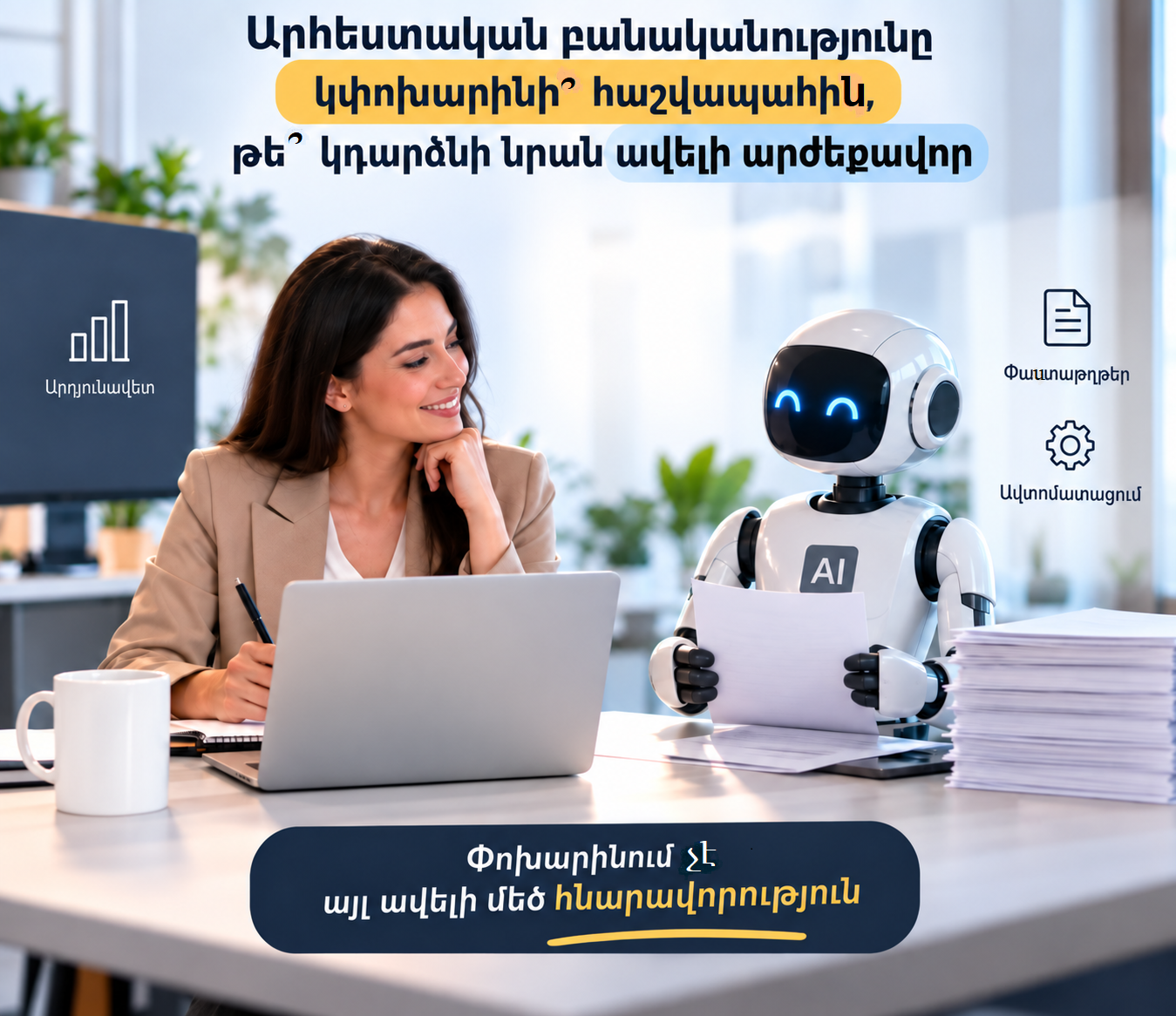
Just a few years ago, it was easy to imagine a typical accountant’s working day. Invoices, contracts, and bank statements were spread across the desk, while accounting software and Excel spreadsheets were open on the computer. A significant part of the day was spent checking documents, entering data, and matching payments. Today, a new “employee” may appear in the same office: artificial intelligence. It requires no salary, never gets tired, can process hundreds of documents in seconds, and can even answer professional questions. It is therefore natural that many accountants are asking whether AI will soon take their jobs. The short answer is that artificial intelligence is unlikely to eliminate the accounting profession, but it will significantly change its content. Professionals who continue to rely exclusively on traditional methods may, however, lose their competitive advantage.
What can AI already do?
Accounting involves many repetitive operations. Data must be transferred from invoices into accounting software, expenses must be classified, bank transactions reconciled, duplicate payments identified, documents checked for completeness, and approaching deadlines monitored. AI-powered tools can read electronic or scanned documents, recognize the supplier, amount, date, and tax details, and then suggest an appropriate accounting entry. They can identify unusual transactions in bank statements, compare information from different sources, and flag possible errors. AI can also help prepare preliminary management reports. For example, it can quickly summarize which expenses have increased, which clients are late with their payments, or which products have become less profitable. Such work previously required hours and sometimes even days of an accountant’s time.
Speed does not necessarily mean reliability
Artificial intelligence produces very convincing answers, which can appear completely correct at first glance. However, it may misinterpret a contract, apply an outdated rule, or simply “invent” a requirement that does not exist. The risk is particularly high when a general answer is treated as a professional conclusion regarding a specific situation. An accounting transaction is more than a combination of figures. The same payment may represent an advance, a loan, a dividend, a service fee, or the settlement of an existing liability. Correct classification requires an understanding of the transaction’s economic substance, contractual relationships, and the parties’ actual intentions. This context is not always visible in an invoice or bank statement. This is where the professional accountant retains a crucial role. AI may suggest an option, but a responsible specialist must verify the source, assess the circumstances, and determine whether the proposed approach is appropriate for that particular business.
Tax accounting is not a field of “ready-made answers”
Extra caution is required when tax accounting is involved. Tax consequences often depend not only on the amount of a transaction but also on the wording of the contract, the place where a service is supplied, the status of the parties, the purpose of the payment, the availability of supporting documents, and the chosen tax regime. Suppose a company purchases an online service from a foreign provider. AI may recognize the transaction as a standard software subscription. A tax professional, however, must also determine which rights have actually been transferred, where the place of supply is considered to be, whether any tax-agent obligation arises, and whether the available documentation is sufficient to substantiate the expense. An incorrect answer to any of these questions may lead to additional tax, penalties, or the disallowance of an expense. An AI-generated response should therefore be treated as a starting point for further examination rather than as a final decision.
Which types of work will gradually decline?
Demand will first decline for work based entirely on mechanical data entry. If an employee simply takes a figure from one document and transfers it to another system, the operation can be automated relatively easily. The same applies to basic reconciliations, standard reminders, and the technical preparation of recurring reports. The transition will be gradual. Nevertheless, companies will become less willing to pay for manually performed processes. Instead, they will value professionals who can supervise automated workflows, identify exceptions, and explain the meaning of financial figures to management.
What will the accountant of the future look like?
The accountant of the future will spend less time collecting figures and more time understanding them. The role will increasingly resemble a combination of financial controller, tax adviser, and business analyst. Such a professional must know how to ask AI the right questions, verify its answers, compare them with legislation and source documents, and recognize risks that the software has missed. At the same time, the accountant must be able to explain in plain language why profit has increased, how a tax risk has arisen, and what may happen if management makes a particular decision. This transformation does not reduce the value of the profession. A good accountant will be able to spend less time on technical processes and focus on tasks that require experience, professional judgement, and responsibility.
Confidential data should not become testing material
Data security is another major concern when using AI. Accountants have access to employees’ personal details, salaries, bank accounts, contracts, client information, and the company’s financial results. Such information should not be uploaded without restriction to publicly available AI systems. An organization must clearly establish which tools may be used, what information may be processed through them, and who is responsible for reviewing the results. Whenever possible, data should be anonymized, while confidential documents should be processed in a secure environment. For a provider of accounting services, this is not merely a technical issue-it is also a matter of client trust.
Who is responsible for an error?
If artificial intelligence calculates a tax incorrectly, suggests an inaccurate report, or fails to identify a risky transaction, the system itself will not accept responsibility. A company cannot simply tell the tax authority, its client, or its owner: “That was what AI recommended.” Final responsibility remains with the individual and the organization. A clear control principle is therefore essential: AI may prepare, compare, and suggest, but important accounting and tax decisions must be approved by a competent professional. The greater the potential financial consequences, the more important human review becomes.
Competition will not be between people and AI
In the future, the real competition is unlikely to be between an accountant and artificial intelligence. It will be between an accountant who uses AI effectively and one who refuses to adopt new tools. Similarly, competition will arise between companies with automated, controlled accounting systems and businesses that continue to collect their documents at the last moment. AI can accelerate processes, reduce mechanical errors, and make financial information easier to understand. However, it does not know a client’s business as an experienced professional does, it does not participate in negotiations, and it does not take responsibility for the consequences of its recommendations. The real question, therefore, is not whether artificial intelligence will replace accountants. A better question is whether accountants are prepared to change how they work.
The future of high-quality accounting lies in cooperation between people and technology. AI will perform rapid calculations and repetitive processes, while professionals will provide reasoning, legal compliance, control, and accountability. This combination will not make the accounting profession unnecessary-it will make it smarter and more valuable to businesses.